

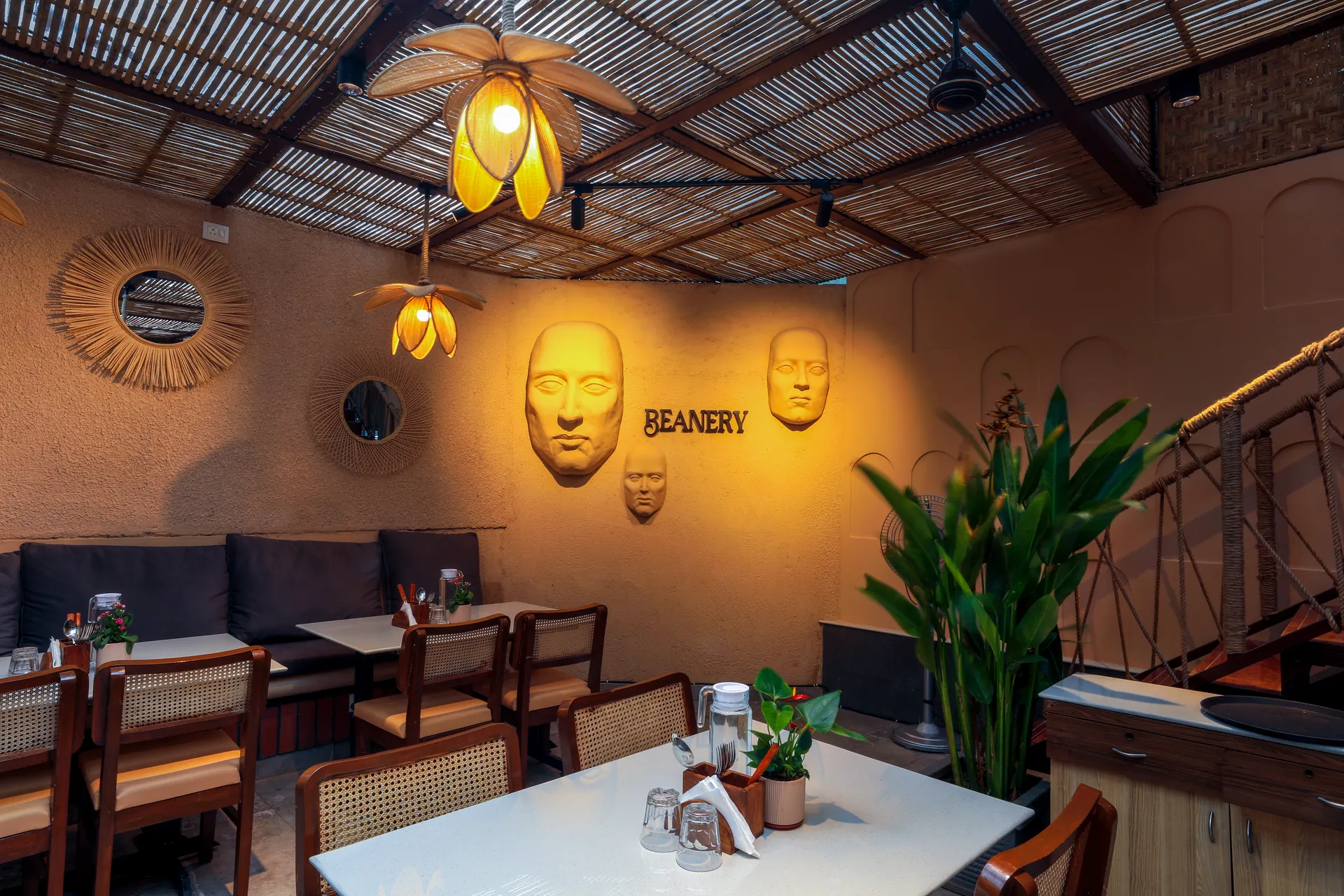
Beanery Café
Natural textures. An easy place to pause.
An easy pause on Senapati Bapat Road
Beanery Café is conceived as an easy pause in the city, on Senapati Bapat Road near Chattushringi in Pune. The owner's brief draws on the openness of bohemian spaces, with a contemporary approach to comfort. The aim is a setting that welcomes a quiet coffee or an unhurried conversation without making either feel like a special occasion.
Colour, texture, furniture and light are considered as a connected language. No single patterned surface or statement object is asked to define the café. Instead, a quiet foundation allows the warmer accents, woven materials and greenery to give it identity through layers that can be read at different scales.
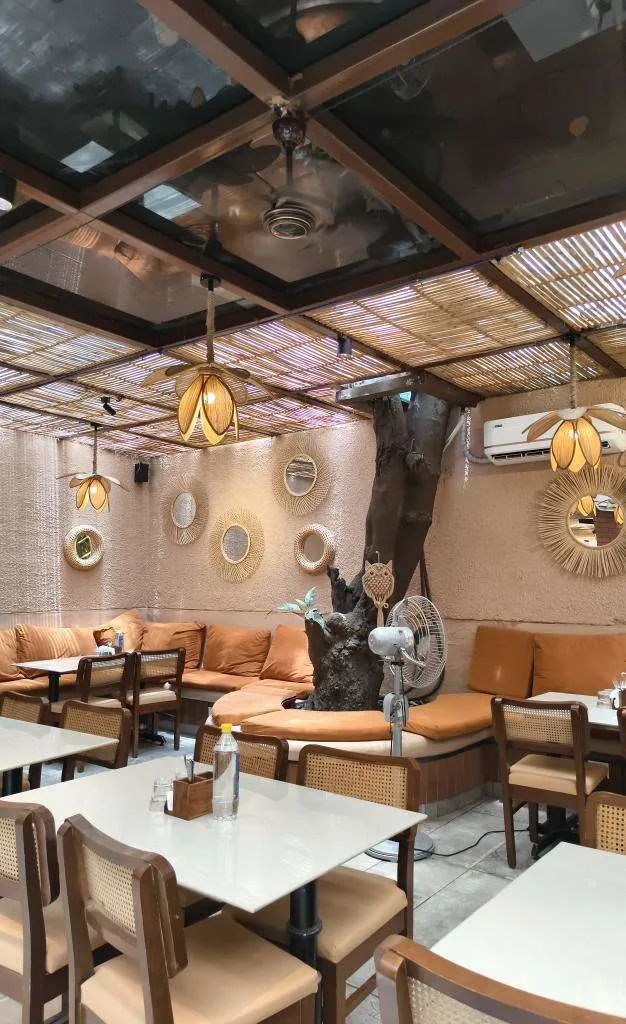
Cream and beige, with warmth in the accents
Cream, warm white and beige establish the palette's quieter register. They give the richer colours and textured elements a shared background, so the room can feel coherent rather than like a series of unrelated choices. The intention is calm without removing the expressive quality of the concept.
Terracotta, rust and clay bring warmth to that foundation. These are colour relationships in the brief, not proof of a particular wall or floor product. Used as part of the larger palette, the warmer tones can connect timber and woven textures while keeping enough visual space for furniture, plants and lighting to be noticed.
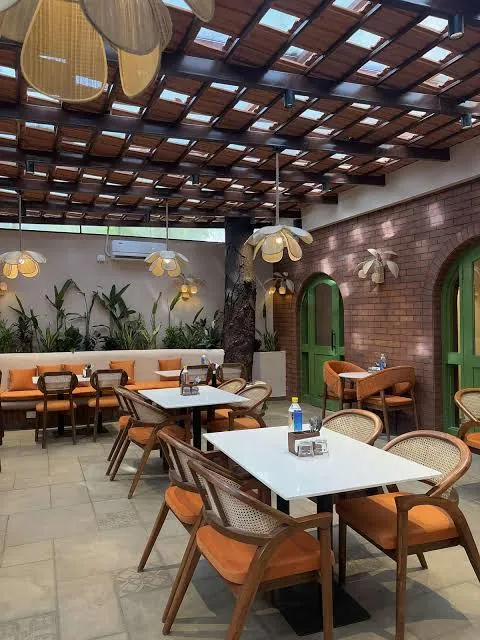
Greenery as another material layer
Olive and sage link the colour palette to the greenery. They introduce a softer relationship between the warmer earth tones and the botanical accents, rather than making plants appear as a separate decorative theme. Green is one part of the composition, with cream and beige remaining the foundation.
Plants add another texture and a different kind of visual detail around the seating. Their intended role is to bring life to the interior and support its relaxed character. The brief does not establish planting species, daylight orientation or measured environmental effects, so the story stays with the relationship between greenery, colour and the spaces to pause.
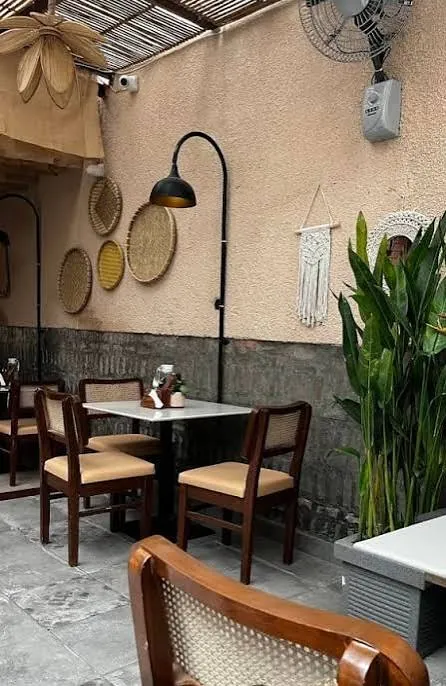
Wood and woven furniture
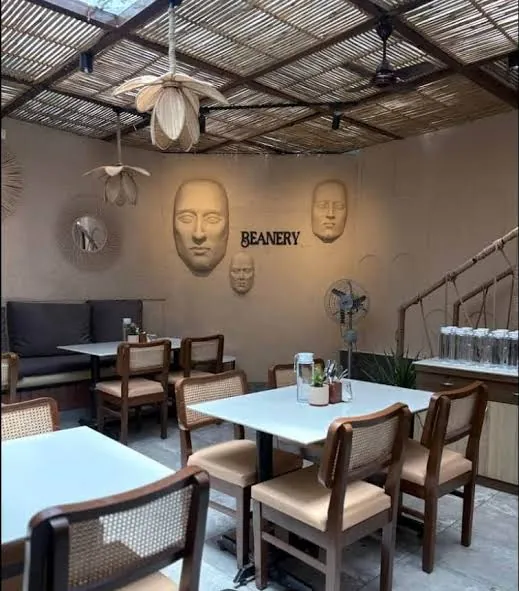
Natural wood, rattan, wicker and cane give the furniture language its tactile character. Wood contributes grain and a warm visual base; woven surfaces introduce finer patterns and a sense of lightness. The materials are considered together so that a chair or table belongs to the wider room rather than becoming an isolated style reference.
Comfort is central to the intended setting, alongside the expressive openness of the bohemian concept. The furniture direction is therefore about how the café feels to spend time in, not simply how many textures it contains. This does not establish a seating capacity, a particular furniture maker or recycled-material sourcing.
Textiles at the scale of touch
Woven fabrics, jute and sisal textures add a smaller scale of detail around the seating. Macramé introduces another kind of pattern, while soft cushions bring a contrast to the firmer wood and woven furniture surfaces. Their intended role is depth and comfort, not the repetition of one motif across every part of the café.
That range works best as a relationship between quieter and more expressive elements. The cream and beige foundation gives the textiles room to be seen, and the earthy accents connect them with the rest of the palette. The brief supports a tactile approach; it does not provide quantified acoustic performance or material maintenance results.
Light that brings the layers together
Warm ambient light and rattan pendants complete the intended material language. The pendants continue the woven detail above the seating, while ambient light is conceived as the connection between colour, furniture and the botanical layer. Light is part of the atmosphere, rather than a separate decorative statement.
The aim is an easy place to settle into: welcoming for coffee, conversation or a moment between the day's plans. The design direction brings that aim back to ordinary choices of colour, texture and comfort. It does not claim measured customer behaviour or business outcomes; those would require evidence beyond the owner's design brief.
Design and project account: prāngaṇa
Frequently asked questions
Where is Beanery Café?
The verified map locality is Senapati Bapat Road, near Chattushringi, Pune. The project map link is retained on this page.
Read Rohit Pasalkar’s reflection on arrival, visual anchors, and neighbourhood cafes.
Working on a hospitality interior?
We work with café and restaurant owners who care about how a space feels.