

Material, Craft, and Climate: Designing a South Indian Restaurant
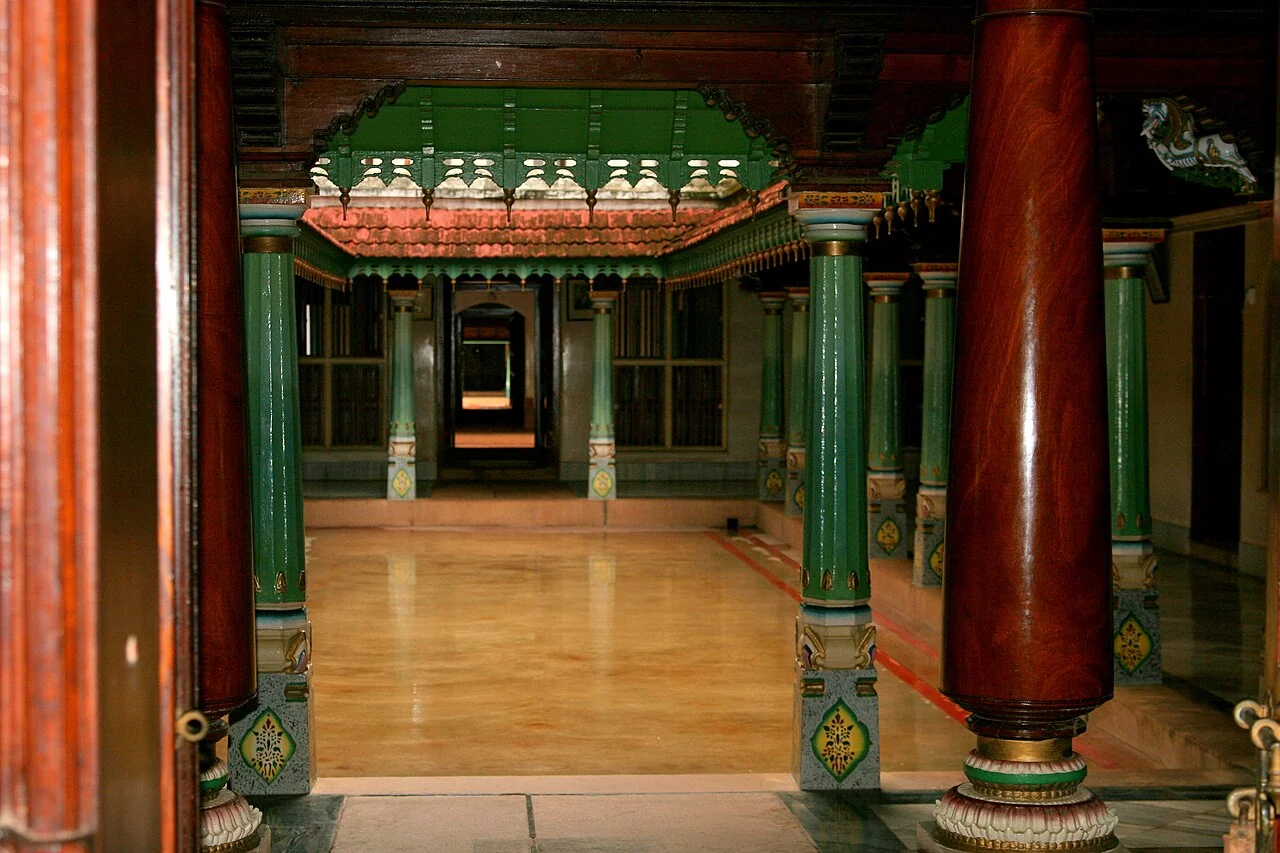
Choose regional materials for the work they need to do: floor wear, pattern, filtered light and everyday care. A practical guide to handmade tile, craft integration and maintainable hospitality interiors.
A rooted restaurant interior starts with a practical question: what must each surface and detail do? Choose floors for traffic and cleaning, handmade tile for a considered pattern, screens for the balance of light and privacy, and crafted elements for a role within the room. Regional references work best when they support use rather than arrive as decoration. This is a guide to making those choices, not an anonymous project account.
Start with floor use, not a material name
Our recommendation is to assess a floor through the daily conditions of a restaurant: shoes and chair movement, spills, cleaning products, transitions and replacement access. A material's appearance is only one part of that assessment. Request a representative sample and the supplier's documented guidance for slip resistance, installation, sealing where applicable and care. Do not assume a regional name alone establishes performance.
Quieter surfaces can give a busy room visual continuity; patterned areas can mark a threshold or a change in use. The tradeoff is between expression and legibility. A continuous field may make movement easier to read, while a dense pattern needs careful placement around furniture and joints. Neither choice guarantees comfort: evaluate the actual finish, substrate and intended cleaning routine.
Understand how handmade Athangudi tiles are made
Dsource's making-process account and Chettinad Tiles' manufacturing description explain colours placed onto glass using patterned moulds or stencils. A cement-and-sand layer and a mortar backing follow, and the tiles undergo water curing. These are sourced process descriptions, not a specification for every maker. The accounts differ in production detail; a schedule described by one manufacturer should not be treated as a universal curing requirement.
Source: Dsource — Athangudi Tiles, making process →
Source: Chettinad Tiles — manufacturing process →
Our studio recommendation is to review several tiles together rather than approve a single sample. Ask the chosen supplier about colour variation, dimensions, laying tolerances, curing readiness and compatible care products. Handmade variation can enrich a surface, but it also makes batch review and a clear installation plan important. Keep spare tiles from the approved supply where replacement is likely to matter.
Give craft a purpose and a clear brief
Craft integration begins with a role: a point of arrival, a repeated detail, an area of touch or a quieter material transition. Our recommendation is to agree the reference, scale, substrate, fixing method and care requirements with the people making and installing it. Specify attribution and permission for any artwork rather than treating cultural imagery as a free decorative resource.
The tradeoff is between richness and competing focal points. A crafted detail can lose its character when every nearby surface asks for equal attention. Leave visual space around it and test its relationship with furniture and light. Do not infer a material, technique or cultural origin from a resemblance alone; document the actual source and distinguish inspiration from reproduction.
Screen light and air without promising performance
A perforated edge can offer an intermediate condition between a solid wall and a fully open boundary. As a studio recommendation, test sightlines, opening sizes, glare, cleaning access, rain exposure and the privacy required at seated height. A screen may admit light while still leaving views too exposed; a denser one may improve enclosure while reducing openness.
Air movement depends on more than the presence of openings. Position, surrounding obstructions, available inlet and outlet paths and the mechanical strategy all matter. Treat ventilation and thermal-comfort claims as matters for project-specific assessment, not automatic benefits of terracotta or another material. A physical sample and a reviewed layout can help clarify the visual tradeoff before installation.
Resolve edges, fixings and future access
Material character is strongest when its ordinary details are resolved. Consider floor transitions, exposed edges, joints, fixing visibility and the way timber, stone, metal or tile meet. Our recommendation is to review the junction, not just each finish separately. Different materials can require different allowances and installation methods; obtain the appropriate technical guidance rather than assuming a flush meeting is always possible.
A concealed fixing may give a quieter appearance but make replacement difficult. An accessible one may be easier to maintain but needs a considered visual position. Similar tradeoffs apply to deep textured surfaces and delicate craft near frequent contact. The aim is a detail that can be understood, cleaned and repaired, not a perfect-looking junction that only works on opening day.
Plan maintenance as part of the design
Agree who will care for the finishes, what products can be used and which parts need periodic review. Request written care guidance for the specified products, test cleaning on a spare sample and make access to planted or screened elements practical. Natural materials are not maintenance-free, and a generic sealing or cleaning rule should not replace the supplier's guidance.
Our preference is to make that routine proportionate to actual use. A highly textured finish may offer depth but need more cleaning attention; a handworked surface may show variation but require thoughtful repair matching. Durability is a relationship between selection, detailing, installation and care. Evaluate those together instead of promising that a material will improve with age in every setting.
Common questions
- Are all patterned cement tiles Athangudi tiles?
- No. Appearance alone does not establish origin or process. Verify the maker and production method; generic patterned-tile photographs should be labelled as references, not proof of Athangudi craft.
- Can a handmade-tile process description be used as an installation specification?
- No. The cited sources explain making. Obtain the selected supplier's project-specific laying, curing-readiness and care instructions rather than generalising one maker's schedule.
- Does an open screen guarantee passive cooling?
- No. A screen can support an intended balance of light, air and privacy, but comfort and ventilation depend on the whole setting and need appropriate assessment.
Our practice areas
prāngaṇa is a hospitality-led interior design studio based in Pune, working across India on restaurant, cafe, residential, and commercial interiors.
Continue reading
The courtyard was never just a form — it was a system of light, air, gathering, and climate. At Prangana, we translate that logic into conte…
A stepwell reveals itself gradually — you see the first level, descend, then the second opens. Each movement gives you something new. At Pra…
At Prangana, we choose materials for how they will feel in five years, not just how they will photograph on opening day. A beautiful finish …